Plan your trip
Is Trinidad Carnival Safe? Safety Tips for Carnival 2027
By Soca Carnival EditorsUpdated 4 min read
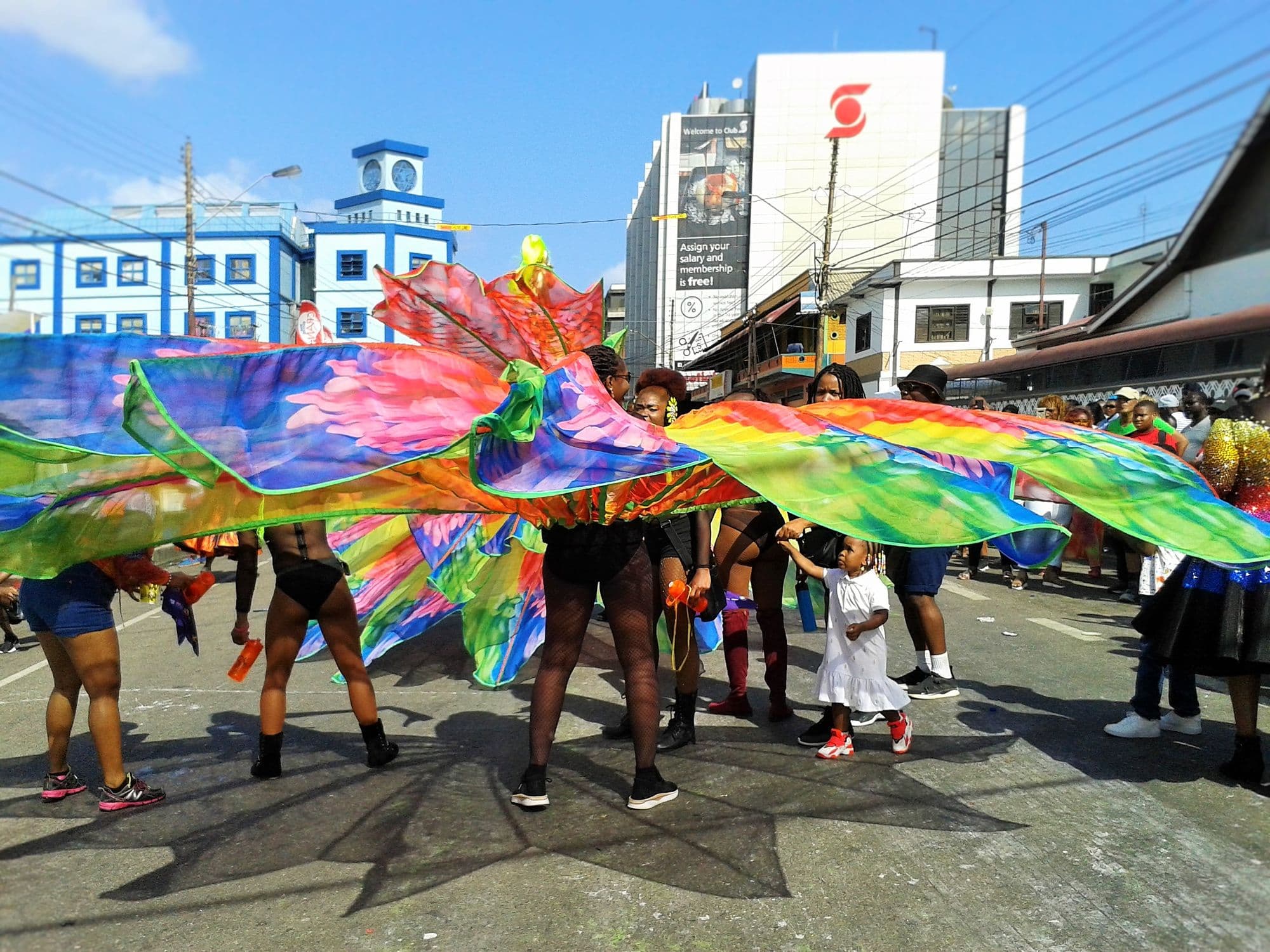
Image credit: Jhaye-Q Shares, via Pexels, Pexels License
Enjoy it, and keep your wits about you
Carnival is joyful, generous and very social, and most visitors leave with nothing worse than sore feet and glitter in places glitter should not be. But Trinidad and Tobago has a high level of violent crime, including gang-related shootings and armed robberies, and big crowds attract opportunistic thieves.1 The aim of this page is not to scare you. It is to help you make the small decisions that keep a great trip great. If this is your first Carnival, pair it with our Trinidad Carnival first-timer's guide.
Save these numbers first
| Service | Number |
|---|---|
| Police | 999 |
| Fire | 990 |
| Ambulance | 811 |
These are the numbers published by the Trinidad and Tobago Police Service and the Ministry of Health.2,3 Add your hotel, your band's section leader and a trusted driver to your contacts too.
On the road with your band
- Stay with your section. The band's security rope and team are there for a reason. Agree a meeting point with friends in case you get separated.
- Carry the minimum. A phone in a pouch or zipped pocket, a card, ID copy and some cash. Leave jewellery and anything you cannot afford to lose at the hotel; the UK government advises against displaying jewellery and valuables during Carnival.1
- Leave the glass at home. Glass bottles are banned during Carnival, and only licensed vendors may handle them, serving drinks in non-glass containers. Weapons are met with zero tolerance, and police run checks through the whole Carnival period, not only on J'ouvert morning.4
- Know the police are there. For Carnival 2026, the security plan included high-visibility policing, prohibitions on weapons, fireworks and glass bottles, the Queen's Park Savannah divided into four zones for crowd management, breath checks for sober driving and extra lifeguards for beaches and rivers.5 The Homeland Security Minister also reminded revellers that anyone arrested during Carnival has to wait until Ash Wednesday to appear in court.4
Drinks, fetes and getting home
Drink spiking is a real risk. The police have warned that drinks at Carnival events may be tampered with and could cause hallucinations, confusion or unconsciousness.6 Their advice for the season:6
- Do not mix different alcoholic drinks.
- Never leave your drink unattended.
- Only accept drinks from people you trust, ideally opened or prepared in front of you.
- Travel in groups, particularly women going to events.
- Wear comfortable shoes in case you need to move quickly.
- Tell someone where you are going and when you expect to be back.
The UK government adds that criminals have used dating apps, including those used by the LGBT+ community, to lure people into robberies and assaults, and advises against inviting strangers back to your accommodation.1
Taxis and getting around
Use licensed taxis, which have number plates starting with H, or drivers recommended by your hotel.7,1 The UK government also advises caution about accepting lifts in private cars or maxi taxis, keeping windows closed and doors locked while driving, and never leaving bags visible on a seat.1 Our getting around guide explains the options.
Areas to be careful in
The UK government advises particular caution in downtown Port of Spain (east of Charlotte Street, south and west of Piccadilly Street, and north of Independence Square), in Carenage, Sea Lots, Belmont, Laventille, Morvant, Beetham, Barataria and Cocorite, and in the interior of the Queen's Park Savannah.1 Parts of these areas fill with masqueraders and spectators on Carnival days, which is different from walking through them alone at night. Avoid isolated places after dark, including deserted beaches, and do not walk or hike alone.1,7
Money and ATMs
- Use well-lit ATMs, ideally in daylight, and withdraw small amounts.1
- Watch your card when you pay, to avoid skimming.1
- Change money at banks and licensed cambios, not on the street.7
- Keep your passport and spare cards in the hotel safe.7
More in our money, SIM and tipping guide.
Heat, sun and hydration
Carnival falls in Trinidad's dry season, which the Ministry of Health describes as a time of high temperatures.3 Its advice: make water your first choice, avoid strenuous activity in the hottest part of the day (usually 10:00 to 14:00), take breaks in the shade and wear sunscreen of SPF 30 or above.3 On the road that means a refillable bottle, regular water between drinks, a hat for J'ouvert morning and sunscreen reapplied through the day.
Laws that catch visitors out
- Camouflage is illegal. It is an offence for anyone, including children, to wear camouflage clothing or bring it into the country.1,7
- Cannabis rules are narrower than you might think. Possession of up to 30g is decriminalised, but you cannot smoke it in public or while driving.1
- Respect private property. Trespass carries heavy penalties.1
- LGBT+ travellers: the UK government notes that in March 2025 consensual same-sex activity was reinstated as a crime, though such laws have not been enforced in recent times, and that public displays of affection could attract negative attention.1
If something goes wrong
- Call 999 for the police or 811 for an ambulance.2
- If your passport or cards are lost or stolen, report it to the police and your bank straight away.7
- If you are robbed, do not resist. Criminals may be armed.1
- Contact your embassy or high commission if you need consular help.
Sources
-
GOV.UK: Trinidad and Tobago travel advice, safety and security (opens in a new tab) ↩ ↩2 ↩3 ↩4 ↩5 ↩6 ↩7 ↩8 ↩9 ↩10 ↩11 ↩12 ↩13 ↩14
-
Trinidad and Tobago Police Service (opens in a new tab) ↩ ↩2
-
Ministry of Health Trinidad and Tobago: Dry Season (opens in a new tab) ↩ ↩2 ↩3
-
Trinidad Guardian: Weapons not welcome in Carnival, February 2026 (opens in a new tab) ↩ ↩2
-
Trinidad Guardian editorial: Wine, jump, celebrate, but keep it safe, February 2026 (opens in a new tab) ↩
-
Trinidad Guardian: Cops warn public about alcohol risks for Carnival, February 2026 (opens in a new tab) ↩ ↩2
-
Visit Trinbago: Travel Tips and Information (opens in a new tab) ↩ ↩2 ↩3 ↩4 ↩5 ↩6
Local contacts
Useful contacts for this guide, with featured listings first. Check details directly with each provider before you rely on them.
Emergency services
- EmergencyFeatured
Ambulance
Trinidad and Tobago
Emergency ambulance number, as published by the Ministry of Health and the TTPS.
- EmergencyFeatured
Fire service
Trinidad and Tobago
Emergency fire service number, as published by the Ministry of Health and the TTPS.
- EmergencyFeatured
Police emergency (TTPS)
Trinidad and Tobago
Trinidad and Tobago Police Service emergency number. Also the number to call to reach the nearest police station.
Government services
- GovernmentFeatured
Visit Trinbago (official tourism website for Trinidad)
Trinidad and Tobago
The national tourism site. Carnival dates, accommodation and transport directories, and travel tips.
- Government
Visit Tobago
Tobago
Official tourism website for Tobago, with beaches, nature, festivals and places to stay.
Listings are for information only and are not an endorsement. We do not take bookings or payments, so confirm prices, numbers and availability with each provider before you rely on them. How listings work.
Run a taxi, guesthouse, tour or food spot in Trinidad and Tobago?
Send us your details and our editors will review them for a listing on our travel guides.
Listings are informational. We do not take bookings or payments, so verify prices, availability and details directly with providers before you book.
Frequently asked questions
What are the emergency numbers in Trinidad and Tobago?
Police 999, fire 990 and ambulance 811. Save them in your phone before you land, along with your hotel's number and your band's contact details.
Is Trinidad Carnival safe?
Carnival draws huge, happy crowds, and police are deployed across the country through the season. Trinidad does have a high level of violent crime, so take the same care you would in any big city: stay with your band, watch your drink, avoid quiet areas at night and plan your ride home.
Can I bring glass bottles to the road?
No. Glass bottles are banned during Carnival, and only licensed vendors may handle them, serving drinks in non-glass containers. Weapons and fireworks are also prohibited.
Can I wear camouflage in Trinidad?
No. Wearing camouflage clothing is an offence in Trinidad and Tobago, for adults and children, and it is illegal to bring it into the country. Leave camo shorts, bags and costumes at home.
What should I do if my drink may have been spiked?
Get to a safe place with people you trust and seek medical help straight away. Police warn that spiked drinks can cause hallucinations, confusion and unconsciousness. Never leave a drink unattended and only accept drinks opened or made in front of you.
Further reading and references
- Trinidad and Tobago Police Service (emergency numbers)
- Ministry of Health Trinidad and Tobago: Dry Season advice and emergency contacts
- GOV.UK: Trinidad and Tobago travel advice, safety and security
- Visit Trinbago: Travel Tips and Information
- Trinidad Guardian: Cops warn public about alcohol risks for Carnival (Feb 2026)
- Trinidad Guardian: Weapons not welcome in Carnival (Feb 2026)
- Trinidad Guardian editorial: Wine, jump, celebrate, but keep it safe (Feb 2026)
Facts last checked 3 October 2026. Read our editorial standards or send a correction.
Keep exploring
- GuideTrinidad Carnival for First-Timers: Tips and Full GuideFirst time at Trinidad Carnival 2027? Tips on what happens each day, what to wear, J'ouvert vs pretty mas, safety, road etiquette and what to book when.Read more
- GuideGetting Around Trinidad and Tobago at CarnivalHow to get from Piarco airport into Port of Spain, spot a licensed H-plate taxi, read the maxi taxi colour bands, use PTSC buses, the water taxi and ride-hailing apps, drive on the left, cope with Carnival road closures and hop over to Tobago.Read more
- GuideTrinidad Carnival Hotels: Where to Stay in Port of SpainWhere to stay for Trinidad Carnival 2027: the best Port of Spain areas for hotels and guesthouses, from Woodbrook and St Clair to Maraval, and when to book.Read more
- GuideMoney, SIM Cards and Tipping in TrinidadThe practical money and phone guide for Trinidad Carnival: the TT dollar and exchange rates, using US dollars, cards and ATMs, VAT and hotel taxes, tipping, and how to get a local SIM or tourist eSIM from bmobile or Digicel.Read more
- ToolPacking and booking checklistWhat to book when, and what to pack for the road and J'ouvert.Read more
- ToolBudget estimatorSee a price range for your trip in TT$ and US$.Read more